| Resource Type | Organism |
|---|---|
| Abbreviation | P.persica |
| Genus | Prunus |
| Species | persica |
| Common Name | peach |
| Description | Peach (Prunus persica (L.) Batsch) The Peach (Prunus persica (L.) Batsch) is a species of small deciduous tree in the genus Prunus of the family Rosaceae. Its branches are cylindrical and smooth. The leaves are alternate, ranging in shape from ovate-lanceolate to oblong-lanceolate with finely serrated margins and linear stipules. The calyx is covered with short pubescence, and the petals are typically pink. The fruit (drupe) is broadly ovate-globose and densely covered in soft pubescence (fuzz). Inside, the stone (endocarp) is hard and woody, containing a flat, ovate-cordate seed. The flowering period occurs from March to April; the fruit ripening period varies by cultivar but generally falls between August and September. Native to China, the peach has a cultivation history spanning over 4,000 years. It is widely grown across regions such as Hebei, Shandong, Jiangsu, and Zhejiang. The species is heliophilous (light-loving) and intolerant of shade, preferring temperate climates. While it is resistant to cold and drought, it is highly sensitive to waterlogging. It thrives in deep, humus-rich, well-drained, and fertile soil with good water and nutrient retention. It is commonly found on sunny or semi-sunny slopes with ample light. Propagation is primarily achieved through sowing and grafting. |
| Organism Image | 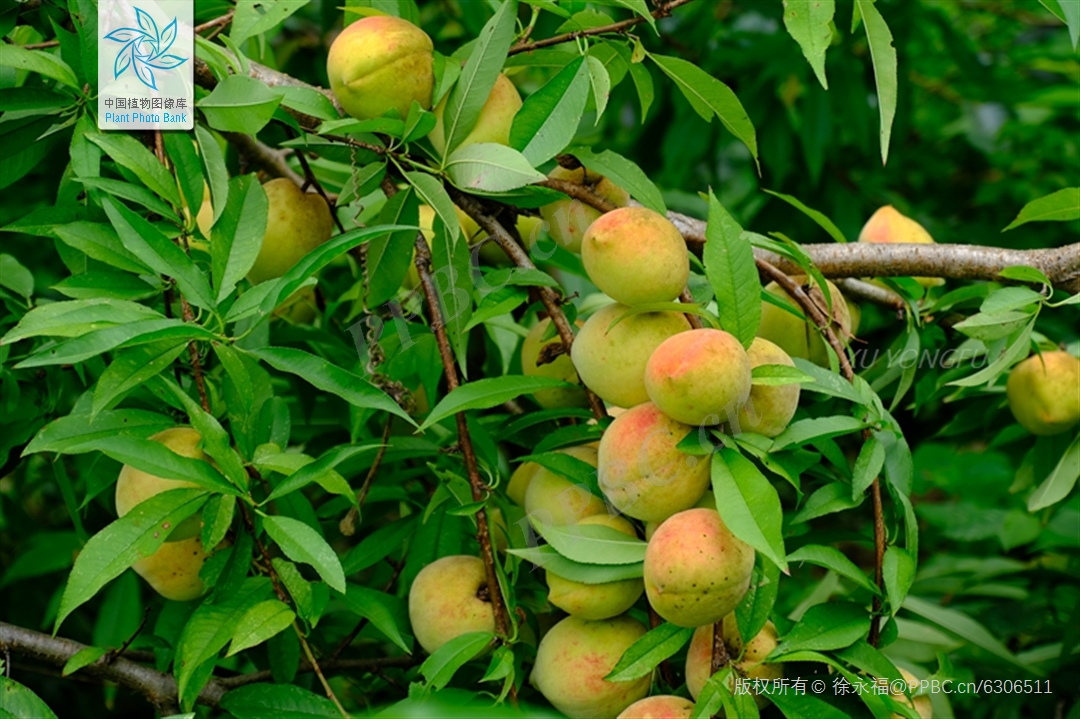 |
| Cross Reference |
Prunus persica
Summary