| Resource Type | Organism |
|---|---|
| Abbreviation | P.mira |
| Genus | Prunus |
| Species | mira |
| Common Name | Tibetan Peach |
| Description | Tibetan Peach (Prunus mira Koehne) The Tibetan Peach, scientifically known as Prunus mira Koehne, is a deciduous tree belonging to the genus Prunus in the Rosaceae family. Its young twigs are green, turning grayish-brown as they mature. The leaves are simple and alternate, ranging from lanceolate to ovate-lanceolate with acuminate tips. The leaf margins feature shallow, blunt serrations but become entire near the apex. The petioles are glabrous and often bear flat, purplish-red glands. The flowers are solitary and bloom before the leaves emerge. They feature broadly obovate petals with slightly emarginate (concave) tips. The flowering period occurs from March to April, followed by the fruiting period from August to September. The fruit is subglobose, fleshy, and indehiscent. The name "Guanghetao" (Smooth-stone Peach) is derived from its unique stone, which is ovoid, flat, and smooth. Native to China, the Tibetan Peach is primarily distributed in Tibet, Yunnan, and Sichuan. It thrives in semi-arid or semi-humid ecological environments. This species is known for its longevity and resilience, possessing strong resistance to drought, cold, and disease, as well as a high tolerance for poor soil. As a light-loving species, it is commonly found in sunny locations such as roadsides near farmland and forest edges. Propagation is generally achieved through seeds or cuttings. |
| Organism Image | 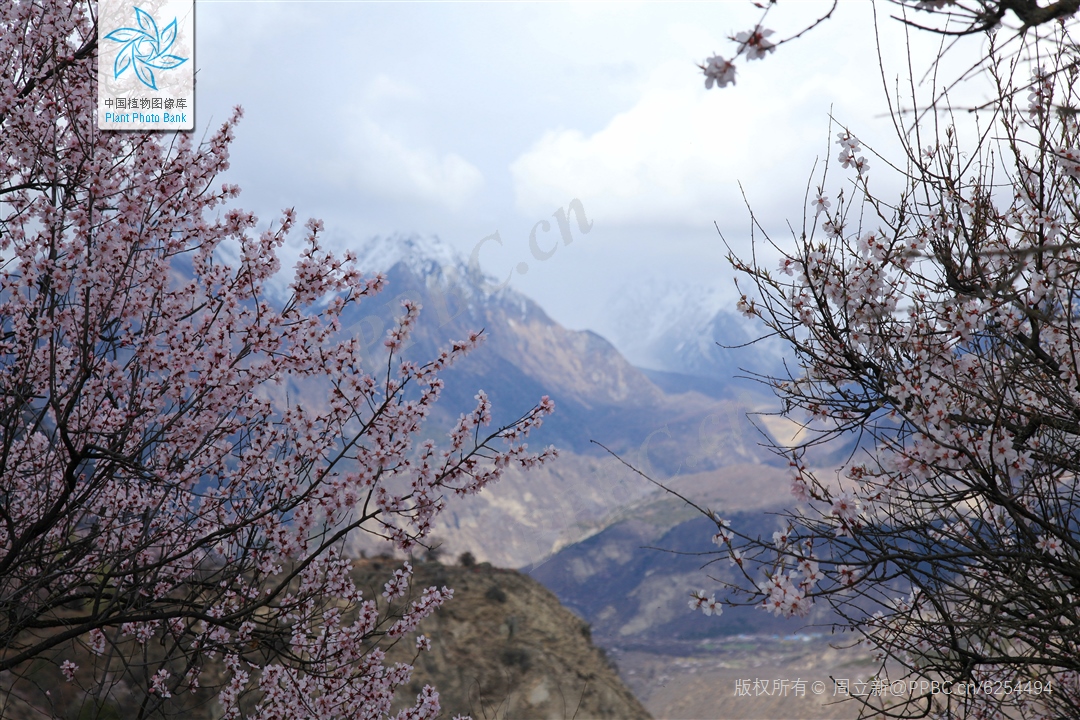 |
| Cross Reference |
Prunus mira
Summary